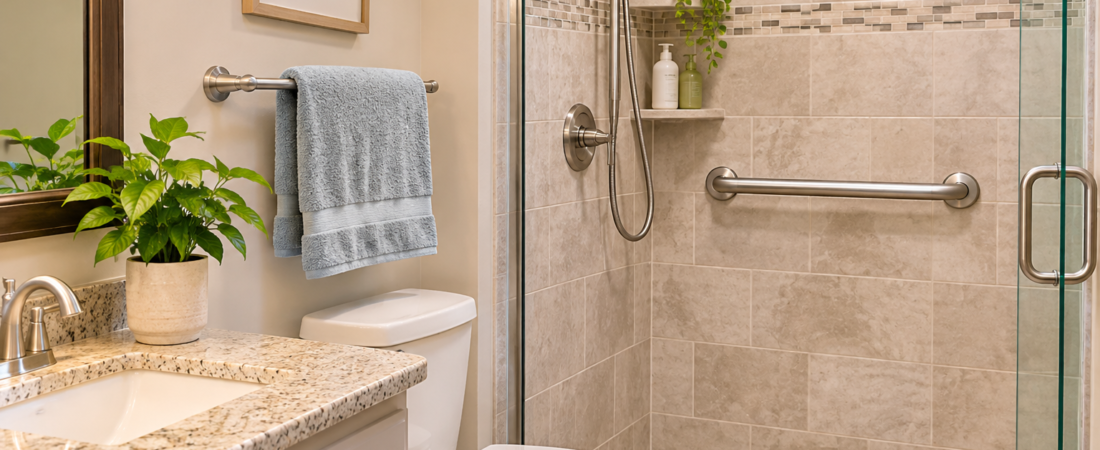
Choosing the right bathroom grab bars for seniors is an important part of creating a safer, more accessible bathroom. Wet floors, slippery surfaces, and stepping in and out of a bathtub or shower can increase the risk of falls, particularly for older adults experiencing changes in balance, strength, or mobility.
Installing properly selected bathroom grab bars for seniors is one way to make a bathroom safer and more accessible. They provide a sturdy place to hold while stepping into the shower, getting out of the bathtub, or using the toilet.
However, not all grab bars are the same. Different styles, materials, mounting methods, and locations can make a significant difference in how well they meet someone’s needs.
In this guide, we’ll explore the different types of bathroom grab bars, where they can be installed, what to look for when choosing one, and how to make informed decisions for yourself or an aging loved one.
Types of Bathroom Grab Bars for Seniors
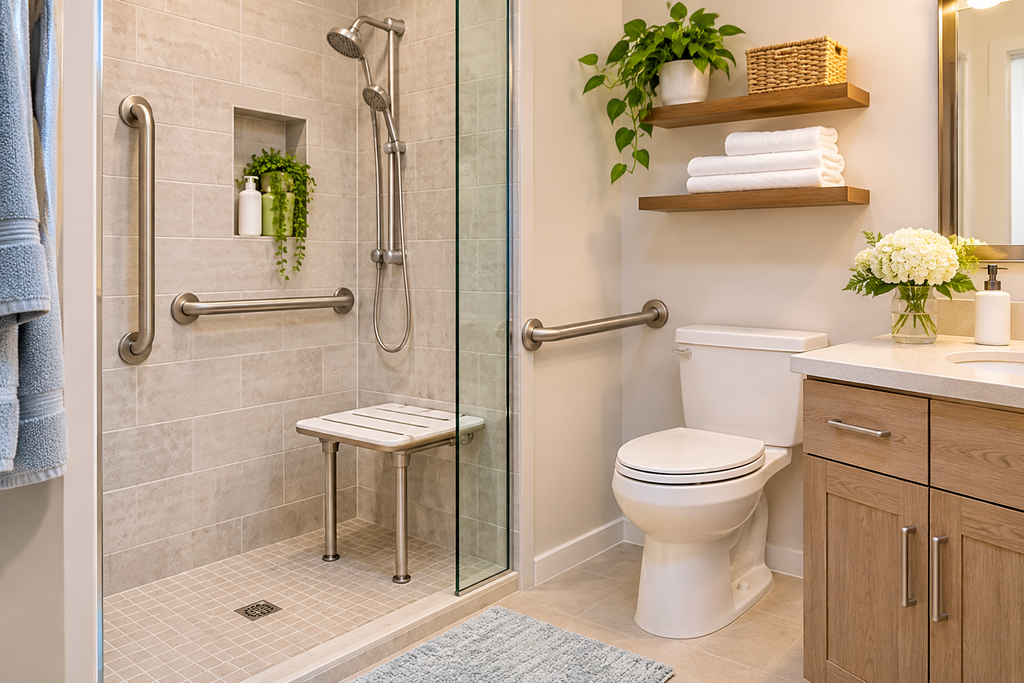
Bathroom grab bars come in several styles, each designed to provide support in different situations. Understanding the differences can help you choose the right option for your bathroom and individual needs.
1. Straight Grab Bars
Straight grab bars are among the most common options. They are available in different lengths and can be installed horizontally, vertically, or at an angle, depending on the user’s needs and the manufacturer’s installation instructions.
These bars are commonly used near showers, bathtubs, and toilets.
2. L-Shaped Grab Bars
L-shaped grab bars combine horizontal and vertical gripping sections. They can provide support for different movements, such as standing up or stepping into a shower.
These bars may be useful where someone needs support in more than one direction.
3. Flip-Up Grab Bars
Flip-up grab bars are typically installed beside a toilet. They can be lowered when support is needed and raised when additional space is required.
They may be particularly helpful in bathrooms where space is limited.
4. Suction-Cup Grab Bars
Suction-cup grab bars attach to certain smooth, nonporous surfaces without drilling. However, they are generally intended only as temporary balance aids and should not be relied upon to support body weight or prevent a fall.
For dependable weight-bearing support, properly anchored grab bars are the safer choice.
Where to Install Bathroom Grab Bars
Choosing the right grab bar is important, but where it is installed matters just as much. Grab bars should be positioned to provide support during everyday movements, particularly when entering or exiting a shower, using the bathtub, or getting on and off the toilet.
1. Inside the Shower
Grab bars installed inside the shower can provide a secure handhold while standing, turning, or moving between a shower chair and a standing position.
Depending on the shower layout and individual needs, a vertical or horizontal grab bar may be appropriate.
2. Near the Bathtub
Stepping over the side of a bathtub can be challenging for someone with limited mobility or balance concerns.
A properly installed grab bar near the bathtub entrance can provide support when entering or exiting. Additional bars may be useful along the bathtub wall.
3. Beside the Toilet
Grab bars near the toilet can help individuals who have difficulty sitting down or standing up.
Wall-mounted or flip-up grab bars may be appropriate depending on the bathroom layout, available wall support, and the person’s mobility needs.
4. Near the Shower or Bathroom Entrance
Some bathrooms may benefit from additional support near the shower entrance, particularly where someone must step over a threshold.
However, grab bars should never obstruct doorways, walking paths, or access to other bathroom fixtures.
Important Installation Considerations
Grab bars intended to support body weight must be securely anchored to suitable structural supports or installed using a manufacturer-approved mounting system. Installing a grab bar into drywall alone is generally not sufficient.
The best placement and height depend on the individual’s needs, bathroom layout, and applicable accessibility guidelines. A qualified installer or occupational therapist can help determine appropriate locations.
What to Look for When Choosing Bathroom Grab Bars
Not all bathroom grab bars are designed the same way. Before purchasing one, it’s important to consider its construction, mounting requirements, size, and how it will be used.
1. Material and Durability
Stainless steel grab bars are a popular choice because they resist corrosion and are well suited for damp bathroom environments.
Look for products designed specifically for bathroom use, with durable finishes and construction that can withstand regular use.
2. Weight Capacity
Check the manufacturer’s stated weight capacity and installation requirements.
A grab bar’s ability to support weight depends not only on the bar itself but also on how securely it is mounted. A high weight rating does not guarantee safety if the installation is inadequate.
3. Length and Diameter
Grab bars are available in different lengths, including common options such as 12, 16, 18, 24, and 36 inches.
The appropriate length depends on the available wall space, mounting locations, and the support needed.
Grip diameter also matters. Choose a bar that the intended user can comfortably and securely grasp.
4. Surface and Grip
Some grab bars feature textured or slip-resistant surfaces that may make them easier to grip when hands are wet.
Others have smooth finishes that are easier to clean. Consider the user’s grip strength and personal preferences when comparing options.
5. Installation Requirements
Before purchasing, review the manufacturer’s mounting instructions and determine whether the bathroom wall can accommodate the required installation.
Some grab bars require mounting into wall studs or structural blocking, while others allow specific approved mounting systems.
If you’re uncertain about the wall structure or installation requirements, consider hiring a qualified professional.
6. Design and Appearance
Bathroom grab bars are available in several finishes, including brushed nickel, chrome, matte black, and white.
While appearance may influence your choice, secure installation, accessibility, and ease of use should always come first.
Common Mistakes to Avoid When Installing Bathroom Grab Bars
Bathroom grab bars can provide valuable support, but choosing the wrong product or installing it incorrectly can create a false sense of security. Here are some common mistakes to avoid.
For additional information about reducing fall risks, visit the CDC’s Older Adult Fall Prevention resources.
1. Relying on Suction-Cup Grab Bars for Weight-Bearing Support
Suction-cup grab bars may seem convenient because they don’t require drilling. However, many are designed only as temporary balance aids and are not intended to support a person’s full body weight.
Always follow the manufacturer’s instructions and never use a suction-mounted bar for weight-bearing support unless it is specifically rated and approved for that purpose.
2. Installing Grab Bars Without Proper Wall Support
A grab bar must be securely attached to an appropriate structural support or installed using a manufacturer-approved mounting system.
Simply attaching a grab bar to drywall or tile without suitable anchoring can result in the bar pulling away from the wall.
3. Choosing the Wrong Location
A grab bar installed too far away, too high, or in an awkward position may be difficult to use when support is needed.
Consider the individual’s height, mobility, and typical movements when determining placement.
4. Using Towel Bars as Grab Bars
Standard towel bars are not designed to support body weight. Pulling on one for balance could cause it to detach from the wall.
Use products specifically designed and rated for grab bar applications.
5. Ignoring Maintenance and Inspections
Even properly installed grab bars should be checked periodically for looseness, damage, or corrosion.
If a grab bar moves, feels unstable, or shows signs of damage, stop using it until it has been inspected and repaired or replaced.
6. Choosing Appearance Over Function
A grab bar should be comfortable to grip, appropriately positioned, and securely installed.
While matching the bathroom’s design is a nice benefit, safety and usability should always be the primary considerations.
Our Recommended Grab Bar
Choosing a bathroom grab bar involves finding the right combination of durability, comfort, secure mounting, and practical design.
One option worth considering is the Moen Home Care 24-Inch Grab Bar, which is featured in our Bathroom Safety guide.
Moen Home Care 24-Inch Grab Bar
This wall-mounted grab bar offers a straightforward design suitable for consideration in showers, bathtubs, and other bathroom areas where additional support may be helpful.
Before purchasing, check the specific model’s dimensions, weight rating, mounting requirements, and compatibility with your bathroom.
Proper installation is essential, and the best placement depends on the needs of the person using it.
For more information about this product and other ways to improve bathroom safety, explore our Bathroom Safety guide on Graceful Tomorrow.
Final Thoughts: Choosing the Right Bathroom Grab Bar
Bathroom grab bars are a practical way to improve accessibility and provide additional support for seniors and individuals with limited mobility.
The right grab bar depends on several factors, including the person’s needs, the bathroom layout, the type of support required, and the available mounting options.
When choosing a grab bar, remember that proper installation is just as important as the product itself. A securely mounted grab bar in the right location can provide valuable support during everyday bathroom activities.
Whether you’re making improvements for yourself or helping an aging parent, taking the time to evaluate bathroom safety can make daily routines more comfortable and manageable.
At Graceful Tomorrow, our goal is to help families discover practical ways to create safer, more comfortable homes while supporting independence and peace of mind.